How Zillexit Software Can Be Stored Safely
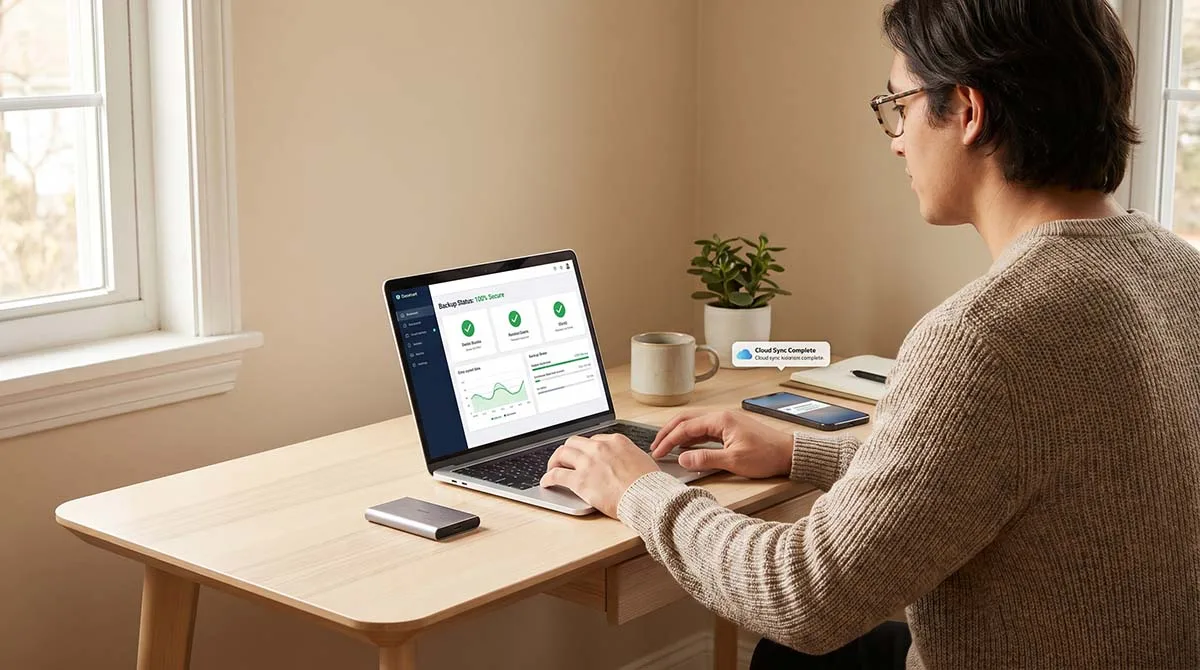
Most Zillexit software gets lost because of a decision the owner made on day one: one copy, one machine, no backup in place. A drive fails, a file gets deleted, ransomware locks the folder, and there is nothing to recover from.
This Zillexit software guide explains how Zillexit software can be stored safely using a layered approach that covers backup strategy, storage type selection, encryption, access control, and recovery testing. Each section centers on specific actions, not theory, so you can work through it and end with a setup that holds when something goes wrong.
The risks are predictable. Access can be permanently blocked by a locked cloud account, a corrupted drive, or an unintentional deletion. The storage methods in this guide address each one directly, with steps you can apply today.
How Zillexit Software Can Be Stored Safely: The Core Risks
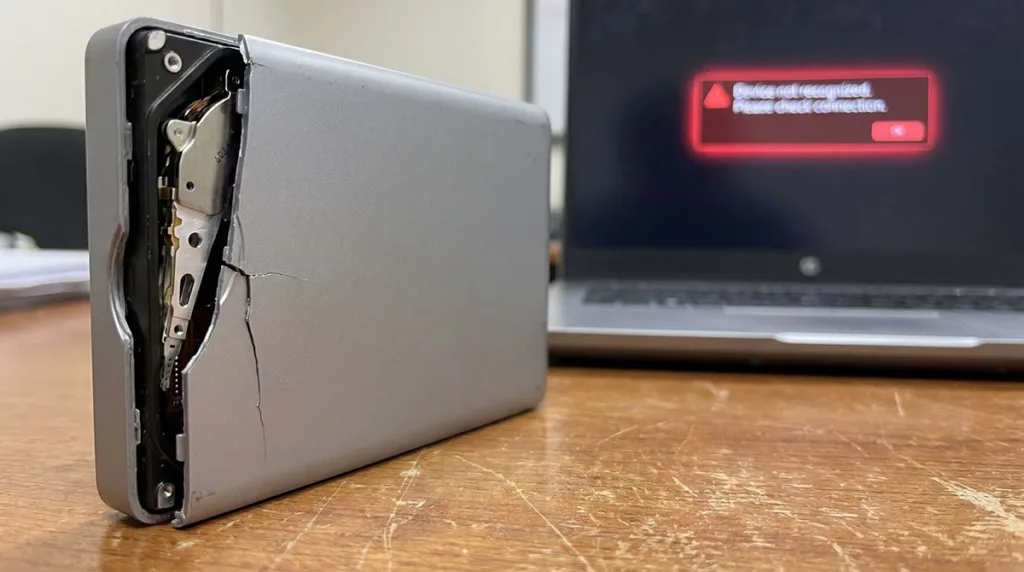
The majority of people maintain a single copy of their software on a single computer without a true system. That holds right up until a drive dies or a file disappears, and then there is nothing to fall back on.
Hardware failure causes more data loss than anything else. Drives degrade without notice. A mechanical hard drive typically lasts three to five years under normal use, and it rarely gives warning before it goes. Malware is the second threat. Ransomware locks stored software files and holds access until payment. Accidental deletion is the more subdued and final option.
Software storage vs. file storage
Storing a document means keeping one file. Storing software means keeping the installer, the license key, and any custom configuration files together. When the license key is lost, a functional installer cannot be activated. Keep all three components in the same labeled folder so recovery does not become a scavenger hunt.
The 3-2-1 Rule for Zillexit Software Backup
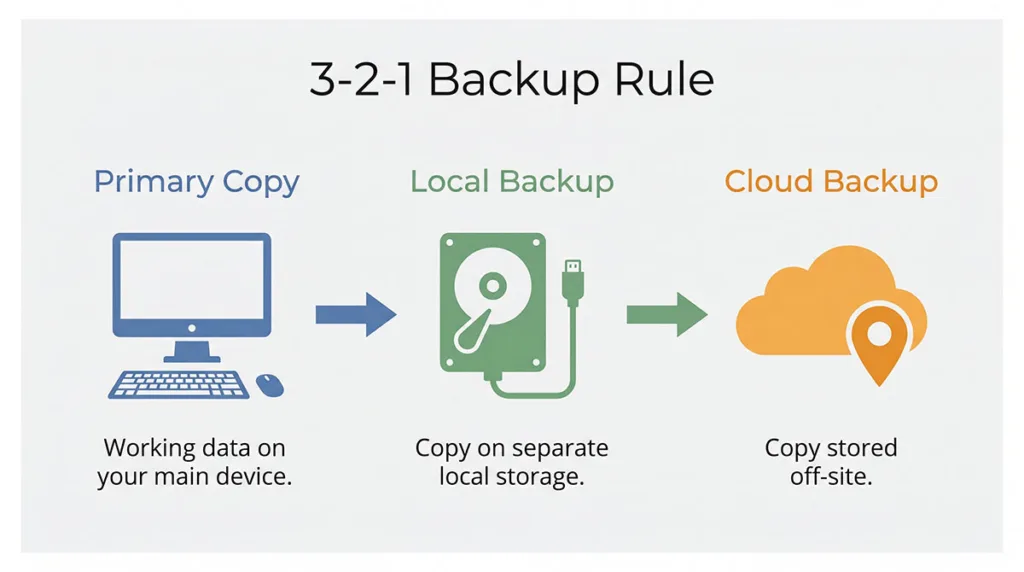
The 3-2-1 backup rule is the standard approach to software protection. It works whether you are in charge of a single machine or a whole team and doesn’t require any specialized tools.
The rule means:
- 3 Copies of The Software: one active copy, two backups
- 2 Different Storage Types: for example, an internal drive and an external device
- 1 Copy Stored Off-Site: in cloud storage or a physically separate location
A practical 3-2-1 setup looks like this:
- Primary copy on your main workstation, actively in use
- Local backup on an external SSD or NAS device, updated weekly or after every update
- Cloud backup on a service like Backblaze, AWS S3, or Google Drive, updated monthly
No single failure takes down all three copies. Your workstation and external drive can fail at the same time, and the cloud copy is still there. If your cloud account gets locked, the local backup gets you running again without a lengthy download.
Best Storage Options for Zillexit Software
Each storage type makes a different trade-off between speed, cost, and risk.
| Storage Type | Speed | Cost | Risk Level | Best For |
| External SSD | Fast | Low–Medium | Physical damage or theft | Local backup |
| NAS System | Medium | Medium–High | Network exposure | Teams, multi-device access |
| Cloud Storage | Internet-dependent | Low (monthly) | Account breach | Off-site redundancy |
| Hybrid (SSD + Cloud) | Fast + flexible | Medium | Balanced | Best overall |
When To Use Local Storage
An external SSD restores the software in minutes with no dependency on internet speed. Local backups also work when your connection is down or when the recovery situation itself involves network problems.
The downside is physical proximity. A fire or theft can take the workstation and the nearby external drive at the same time. Pair local storage with at least one remote backup for that reason.
When To Use Cloud Storage
Cloud storage covers the physical disasters that wipe local backups. Files stored off-site survive hardware failures, fires, and theft at the primary location. Most cloud providers keep version history too, so an accidental overwrite does not mean permanent loss.
The trade-off is restoring speed. Large software packages take time to download on average connections. Treat cloud as your safety net and local storage as the faster recovery layer.
Encryption and Access Control
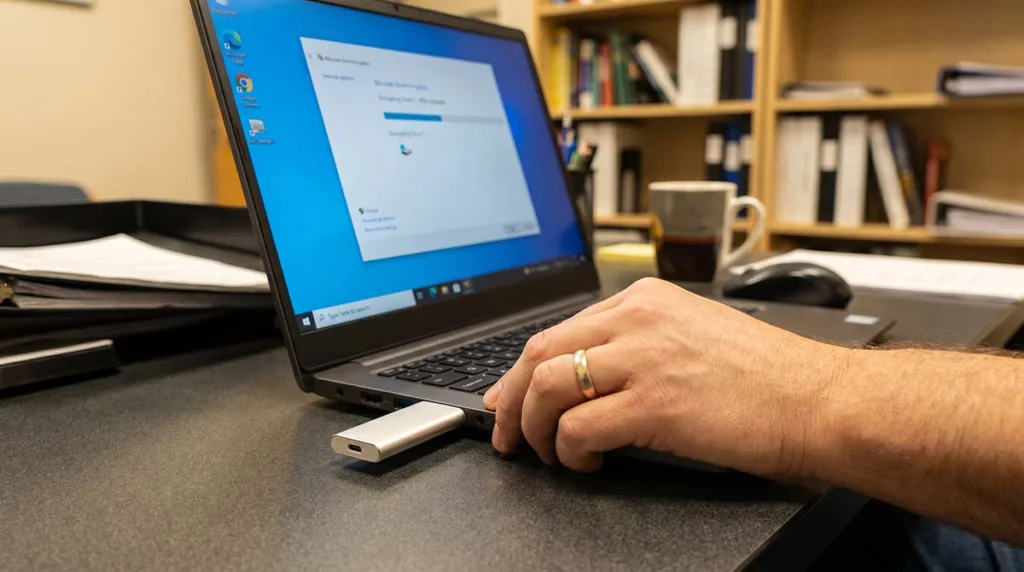
An unprotected backup is a liability. Attackers rarely need sophisticated methods. Hacking Zillexit software storage typically starts with unprotected files, weak passwords, and open folders rather than advanced exploits. Encrypt your files and limit who can reach them.
Encrypting Local Backups
Full-disk encryption on external drives locks access if the device is stolen or picked up by the wrong person. On Windows, BitLocker handles this natively. On macOS, FileVault does the same. For cross-platform protection, VeraCrypt creates encrypted containers that work on any operating system.
At minimum, encrypt the folder containing the installers and license keys, even if the rest of the drive is open. License keys belong in encrypted storage. A plain text file sitting on an open drive is a credential waiting to be taken.
Protecting Cloud Storage Access
Cloud accounts require a layer of security that is distinct from that of the files. At minimum, apply these four controls:
- Use a strong, unique password at least 16 characters, not reused from other accounts
- Enable multi-factor authentication (MFA) so a leaked password alone cannot grant entry
- Set download permissions to restrict who can retrieve the backup files
- Review account access logs monthly to catch unfamiliar login locations or devices
In team environments, role-based access stops over-permissioning before it becomes a problem. Not every team member needs write access to the backup folder. Assign write access to administrators and read-only access to everyone else.
Version Control and File Organization
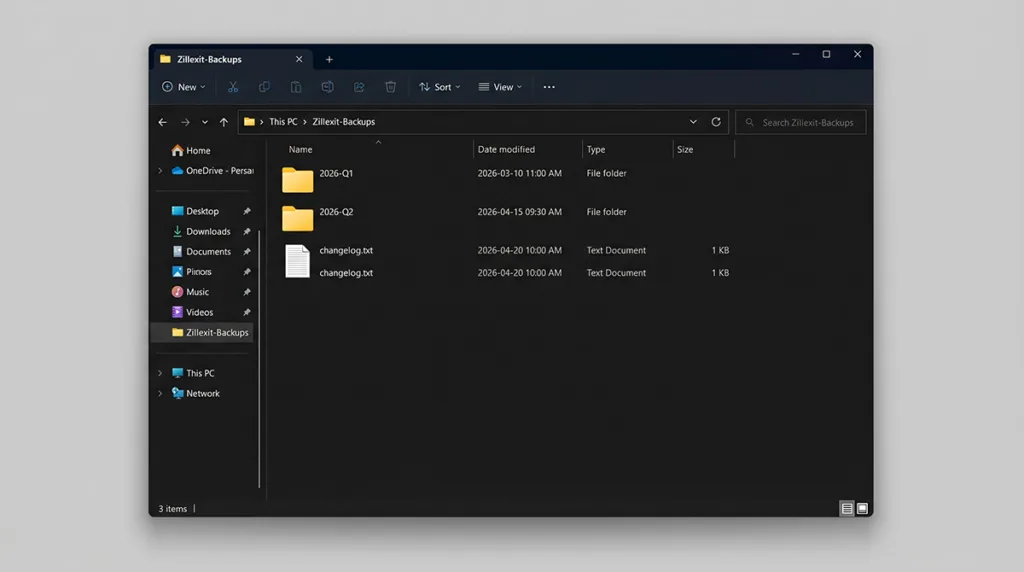
Mislabeled backups cause their own kind of failure. An outdated build with the wrong label gets installed instead of the current version, and the problem only surfaces after the damage is done. A clear naming system prevents that.
A consistent naming format that works in practice:
Zillexit-v[version]-[type]-[YYYY-MM-DD]
Examples:
- Zillexit-v3.1-release-2026-05-15
- Zillexit-v3.2-beta-2026-06-01
- Zillexit-v3.1-backup-2026-06-14
Pair the naming system with a simple changelog file. A plain text document or spreadsheet recording version number, release date, what changed, and storage location takes five minutes to maintain and saves hours during a real recovery.
A clean folder structure example:
/Zillexit-Backups/
/2026-Q1/
Zillexit-v3.0-release-2026-03-10/
/2026-Q2/
Zillexit-v3.1-release-2026-05-15/
changelog.txt
Any version becomes locatable in under a minute without digging through unnamed folders.
Why the changelog matters as much as the folder structure
The folder structure tells you where files live. The changelog tells you what each version does. Without both, you might restore the right file to the wrong machine, or install a version that predates a critical configuration change.
A useful changelog entry looks like this:
Version: 3.1 | Date: 2026-05-15 | Type: Release
Changes: Updated license key format; fixed startup error on Windows 11
Storage: /Zillexit-Backups/2026-Q2/Zillexit-v3.1-release-2026-05-15/
Tested by: [name] | Tested on: [date]
It takes less than two minutes to write each entry. In a collaborative setting, the entry is written by the backup creator. That accountability prevents the situation where three people each assume someone else logged the update.
For archiving, keep the last two major releases alongside the current version. Compress versions older than that and move them to a separate archive folder rather than deleting them outright. Problems sometimes surface weeks after a release, and rolling back further than one major version may be necessary.
How to Test and Verify Your Backups

An unrestored backup is a guess. A file that opens but fails during installation is worthless in a real recovery. In Zillexit software environments, testing entails verifying that each restored copy operates with the same configuration, license activation, and output as the original.
Checksum verification is the fastest check. Generate a checksum when the backup is first saved. Compare that fingerprint later to confirm the file was not altered or corrupted during storage. Matching values mean the file is clean. If there is a mismatch, the backup must be changed before you can depend on it.
Beyond checksums, run a monthly recovery drill:
- Pick one backup copy from storage
- Restore it to a test environment or spare machine
- Confirm it installs and launches correctly with the stored license key
- Log the date, version tested, and result
This finds damaged backups before a real failure compels the discovery and takes less than thirty minutes.
Common Storage Mistakes to Avoid
The same four mistakes show up in most storage failures.
Single-Copy Storage
One copy means one point of failure. Hardware dies, files disappear, cloud accounts get locked out. Keep at least three copies across two locations.
No Encryption
Storing software without encryption hands over the installation files and license keys to anyone with physical or remote access to that device. Setting up file or disk encryption takes under an hour.
Untested Backups
Files corrupt. Storage media degrades. Backup tools fail without notice. It is an assumption that you have never restored a backup. Run monthly recovery drills to know what you have.
Cloud-Only Reliance
Cloud storage goes down. Accounts get locked. Internet drops. A local copy covers the gaps that remote-only storage leaves open.
Frequently Asked Questions
1. What is the safest way to store Zillexit software?
Keep at least two physical copies and one cloud backup in separate locations. Encrypt all copies and limit access to authorized users. That covers hardware failure, theft, and remote account breaches.
2. How often should I back up Zillexit software?
Back up after every major update or configuration change. For stable versions with no active changes, a monthly review confirms files are intact and accessible. Teams pushing frequent updates should automate weekly backups.
3. Does Zillexit software need encryption?
Yes. Encrypt any stored software that contains license keys, configuration data, or proprietary settings. Encryption makes those files unreadable if the storage device falls into the wrong hands, which matters most for portable drives and cloud storage.
4. Can I store Zillexit software on cloud only?
Cloud storage alone leaves gaps. Account lockouts, slow restores during outages, and provider incidents can all block access when you need it most. Use cloud as one layer of a multi-location strategy, backed by at least one local copy.
Conclusion
The most common reason stored software becomes unrecoverable is depending on a single copy. Knowing how Zillexit software can be stored safely means building four habits: multiple copies, encryption, controlled access, and tested recovery. Encrypt your local backup drive, enable MFA for your cloud account, start with the 3-2-1 rule, and perform a recovery test by the end of the month. Each step takes under an hour. Together, they cover the ways software gets lost.
For more insightful articles, please visit Bloghart.