Droven.io Best AI Jobs in USA: Roadmap, Tips & Salaries
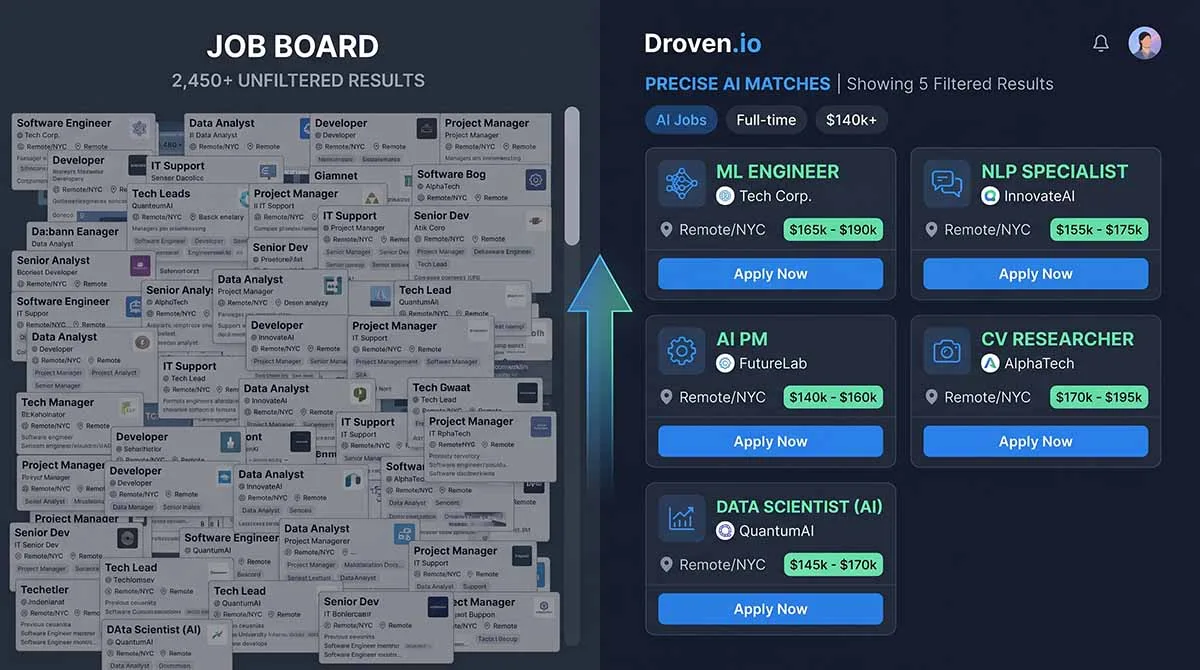
Most AI job boards have a noise problem. Thousands of listings flood search results, but a large portion are outdated, mislabeled, or stuffed with AI keywords to attract candidates for roles that have nothing to do with artificial intelligence. Droven.io cuts through that. It tracks real AI job postings across the United States in real time, filtering by actual AI-specific roles rather than keyword proximity.
The result is a cleaner signal: genuine machine learning, NLP, and generative AI positions with verified salary data. This guide uses Droven.io insights to map the best AI jobs in the USA, break down what they pay by city and experience, and give you a practical career roadmap to get hired.
What Droven.io Is and How It Works
Most job platforms treat AI as a keyword, not a category. Search “AI jobs” on LinkedIn and you get customer service roles with “AI-powered tools” buried in the description. Droven.io works differently.
The platform aggregates and filters tech job postings across the US with a sharp focus on AI, machine learning, and data science roles. Instead of returning thousands of loosely related results, it narrows by actual role type. Search for “RAG engineer” or “LLM fine-tuning specialist” and you get listings published in the last 72 hours — not roles from six months ago still showing as active.
How you use it matters. Broad search terms waste your time. Set job alerts using precise role names: “MLOps engineer,” “computer vision engineer,” “prompt engineer,” or “AI data annotator.” You will receive fewer alerts and far more relevant ones. AI hiring at well-funded startups moves fast — a senior ML role can attract over 200 applications within 48 hours. The specificity of your alert determines whether you see a role in time to apply.
Droven.io also surfaces entry-level AI jobs that rarely appear on general platforms, including AI evaluator and data annotation roles — the cleanest entry point into the field for candidates without a technical background.
Top AI Jobs Available in the USA Right Now
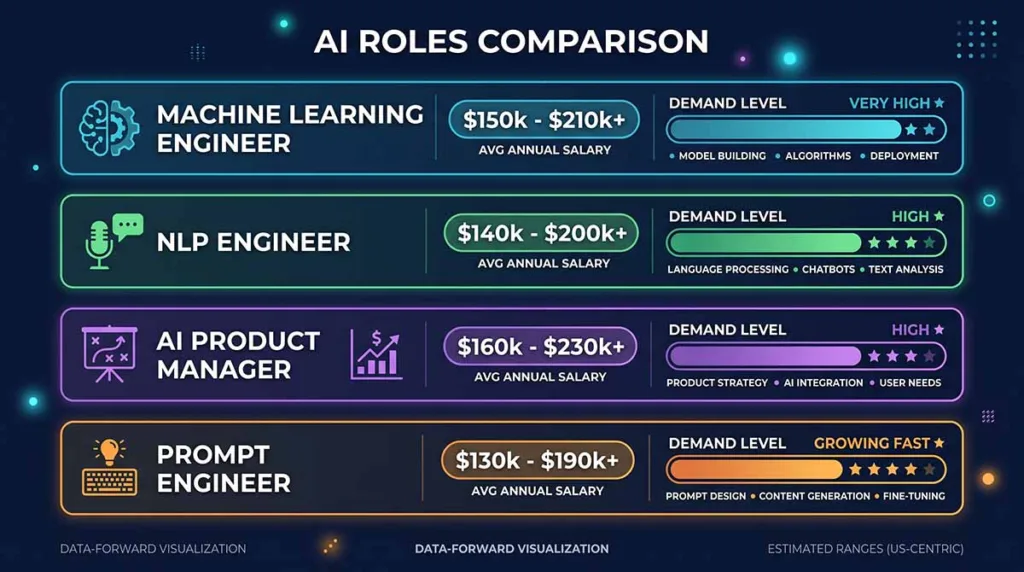
Job data from Droven.io shows a distinct trend for 2026. A handful of AI roles dominate active postings: high salaries, consistent demand, and strong long-term value. These are the positions worth your attention, based on what employers are actually hiring for right now.
Machine Learning Engineer
The machine learning engineer sits at the core of most AI products. You build, train, and deploy the models that power intelligent systems. The role spans industries — fintech, healthcare, retail, and autonomous systems all hire heavily for it.
Core Skills:
Python, TensorFlow, PyTorch, and scikit-learn. Strong candidates also demonstrate model evaluation, A/B testing, and deployment pipeline knowledge.
Salary Range:
$130,000 to $180,000. Demand holds steady across company sizes — from pre-revenue startups to Fortune 500 firms. It remains the most broadly available senior AI role on Droven.io.
NLP Engineer and LLM Specialist
Natural language processing went from niche to mainstream the moment large language models hit enterprise adoption. Every company building a chatbot, document summarizer, or AI assistant now needs an NLP engineer or LLM specialist.
Skills That Matter:
Transformers, BERT, GPT fine-tuning, spaCy, and NLTK. Hands-on experience with Hugging Face and retrieval-augmented generation (RAG) moves your candidacy higher.
Salary range:
$130,000 to $185,000. This is the fastest-growing AI sub-role in 2026. LLM fine-tuning and RAG engineer listings appear on Droven.io daily, and most attract fewer than 50 applicants in the first 48 hours.
AI Product Manager
Not every AI career requires writing code. The AI product manager defines what an AI product does, leads cross-functional teams, and aligns engineering output with business goals.
Core Skills:
Product strategy, data literacy, user research, and stakeholder communication. You need to understand AI capabilities well enough to evaluate feasibility — not build it yourself.
Salary Range:
$120,000 to $160,000. This role also carries one of the clearest paths for career switchers. Business analysts, project managers, and digital marketers with AI familiarity are genuinely competitive candidates.
Entry-Level Roles
Most AI career articles assume you already have a CS degree. That assumption shuts out a large portion of candidates before they start. Droven.io surfaces three entry points that require no engineering background.
AI Data Annotator — You label training data for machine learning models. Salary: $45,000 to $75,000. No degree required. Many annotators move into junior data science roles within 18 months.
AI Evaluator / RLHF Specialist — You evaluate the safety, accuracy, and quality of model outputs. Companies including OpenAI and Anthropic hire actively for this. Salary starts around $60,000 and scales with experience.
Prompt Engineer — You design and test input sequences to improve AI output. A growing role at AI-native companies and startups deploying LLM-powered tools. Salary: $70,000 to $130,000 depending on seniority.
These roles appear on Droven.io daily. Broad job boards rarely list them accurately or under the right title.
AI Job Salaries by Role, City, and Experience
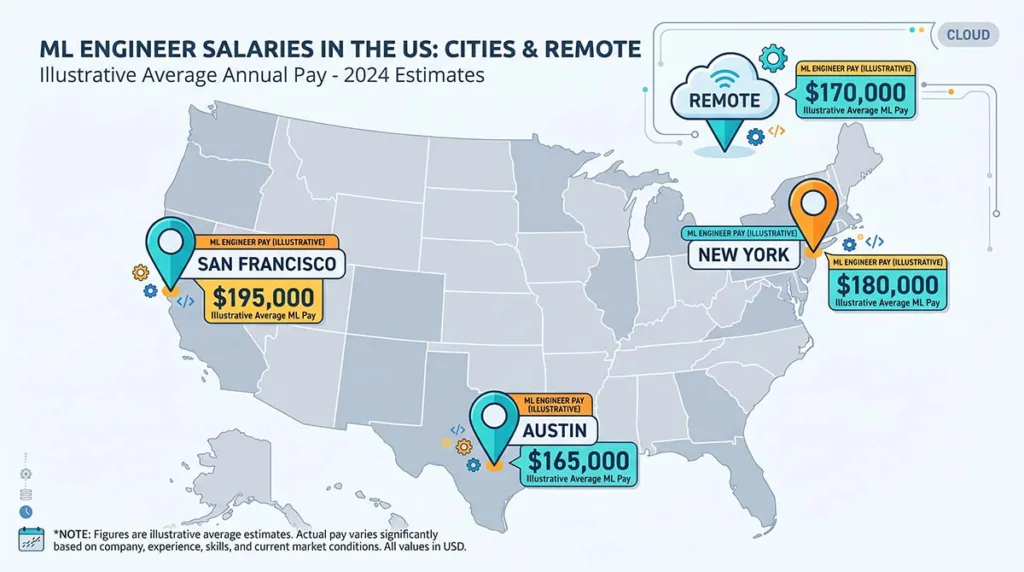
Salary ranges tell half the story. Where you work — or whether you work remotely — shapes your actual offer by 20 to 40 percent. Most AI career guides skip this entirely.
Geographic salary variance is real and significant. A machine learning engineer earning $150,000 in Austin takes home more in purchasing power than a counterpart earning $165,000 in San Francisco, where rent alone can exceed $3,500 per month. For remote-first roles, the numbers shift again — many AI companies now pay location-agnostic rates, which benefits candidates outside major tech hubs.
| Role | San Francisco | New York | Austin | Remote |
| Machine Learning Engineer | $155K–$185K | $145K–$175K | $130K–$160K | $130K–$165K |
| NLP / LLM Specialist | $160K–$195K | $150K–$185K | $135K–$170K | $135K–$170K |
| AI Product Manager | $140K–$165K | $130K–$155K | $120K–$145K | $115K–$145K |
At the top end, senior AI researchers and ML infrastructure engineers at Google DeepMind, Anthropic, and OpenAI earn between $250,000 and $400,000 in total compensation including stock. These roles rarely appear on open job boards. Droven.io tracks them when they do.
Equity Matters:
An offer with a $140,000 base and 0.5% equity at a Series A company can outperform a $180,000 base at a mature tech firm over a four-year vest. Always evaluate total compensation, not just salary.
Droven.io AI Career Roadmap by Role
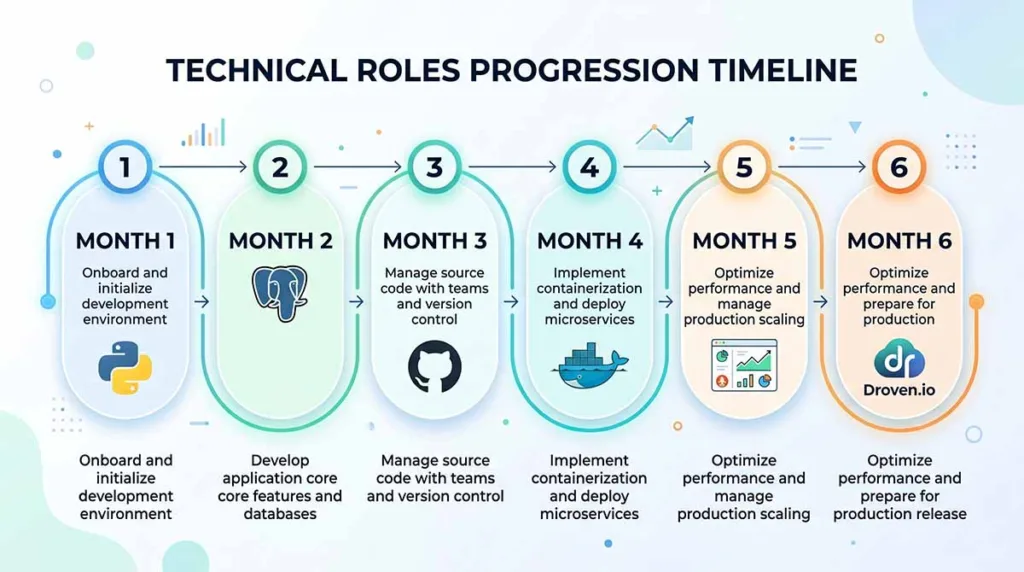
Generic career advice — “learn Python, build projects, apply” — fails most job seekers because it has no timeline and no role-specific direction. Droven.io job data shows exactly which skills employers screen for. Build toward those.
0–6 Months for Technical Roles (ML / NLP / Computer Vision Engineer)
This plan works for anyone starting from a programming foundation. A CS degree is not required. Consistency and a portfolio are.
Month 1–2: Build the foundation:
Focus on Python and working-level math: linear algebra, probability, and statistics. Use free resources — fast.ai (Practical Deep Learning), Khan Academy for math gaps, and Kaggle Learn for structured Python exercises. Avoid jumping between courses. Finish one before moving on.
Month 3–4: Build Your First Project:
Pick one domain — image classification, text summarization, or sentiment analysis. Build it and host it on GitHub. Document every decision you made and why. Employers screen for thinking process, not just output. A well-documented notebook beats a polished-looking project with no explanation.
Month 5–6: Apply And Refine:
Set Droven.io job alerts for your target role. Pull language directly from active listings and mirror it in your resume. Most applicant tracking systems screen by keyword match before a human sees your application. Apply within 48 hours of each new listing — AI roles at funded startups fill faster than any other tech category.
0–4 Months for Non-Technical Roles (AI PM / AI Trainer / Prompt Engineer)
You do not need to write code. You need to understand what AI can and cannot do, and demonstrate that judgment in a portfolio.
Month 1: Build AI literacy:
Complete Google AI Essentials (free on Coursera). Follow it with Anthropic’s and OpenAI’s published documentation. You are learning to speak the language of people who build models — not learning to build them yourself.
Month 2–3: Build One Concrete Artifact:
For AI PM roles, write a product requirements document for an AI feature. Pick an existing product, identify a gap, and spec out a solution with user stories and success metrics. For prompt engineer or AI trainer roles, build a prompt portfolio: document the problem, your iterations, and the measurable improvement in output quality. Post it on GitHub or a public Notion page.
Month 4: Apply Through Droven.io:
Filter by role type and company size. Early-stage AI startups are far more open to non-traditional backgrounds than established tech companies. Your portfolio does the convincing your resume cannot.
IT Career Tips for USA AI Jobs That Actually Work
The job search advice filling most AI career guides is recycled from standard software engineering content. AI hiring in the USA works differently. Here is what actually moves the needle.
Set Narrow Job Alerts:
Searching “AI” on Droven.io returns noise. Use specific role terms: “LLM engineer,” “ML platform engineer,” “computer vision researcher,” or “AI safety evaluator.” You cut alert volume by roughly 80 percent and get roles that match your actual skills.
Apply Within 48 hours:
Well-funded AI startups receive 100 to 300 applications per senior role, often within the first two days. After 72 hours, many hiring managers have already moved to phone screens. Timing your application is a strategy, not a detail.
Know What US AI Interviews Actually Test:
This differs significantly from standard software engineering interviews. Senior ML roles often include a take-home model task, a research presentation, or a system design session focused on ML pipeline architecture — not LeetCode-style algorithm questions. Junior roles lean on Python proficiency, statistics fundamentals, and one demonstration project.
Watch For Red Flags In Listings:
A job posting that lists 12 required tools and three AI frameworks for a junior role is a skills-mismatch trap. The company either does not know what it needs or it is hiring a senior candidate at a junior salary. Both situations waste your time.
International Candidates:
US-based remote AI roles do hire internationally. Filter Droven.io for “remote” and “visa sponsorship” separately — companies that sponsor H-1B visas usually state it explicitly. Contractor arrangements often move faster than full-time roles for international applicants. Your time zone overlap with US hours is a genuine selling point in your cover letter.
Frequently Asked Questions
1. What is Droven.io and how does it help with AI jobs?
Droven.io is a job aggregation platform focused on AI, machine learning, and data roles in the United States. It filters real-time postings by AI-specific role types, surfacing listings that general platforms often bury or mislabel.
2. What are the highest-paying AI jobs in the USA in 2026?
AI research scientists and LLM infrastructure engineers at companies like Anthropic, OpenAI, and Google DeepMind earn between $250,000 and $400,000 in total compensation. For accessible senior roles, NLP engineers and ML engineers average $130,000 to $185,000.
3. Can I get a US AI job without a computer science degree?
Yes. AI trainer, data annotator, prompt engineer, and AI product manager roles do not require a CS degree. A strong portfolio and role-specific skills matter more than formal credentials for these positions.
4. How do I use Droven.io to find remote AI jobs?
Filter by “remote” in location settings and set role-specific alerts using precise terms like “remote LLM engineer” or “remote MLOps.” Avoid broad searches — they return volume without relevance.
Conclusion
The top AI jobs in the USA are genuine, well-paying, and available to more people than the majority of career guides recommend. The gap is not talent — it is clarity. Most candidates spend months on broad skills with no role-specific direction, then apply late to listings that have already filled.
Pick one role from this list. Build the portfolio that role requires. Set a precise Droven.io job alert today, not next month. The market moves fast. Candidates who show up early with relevant work get hired.
For more insightful articles, please visit Bloghart.